Friends in Need
Play Friends in Need
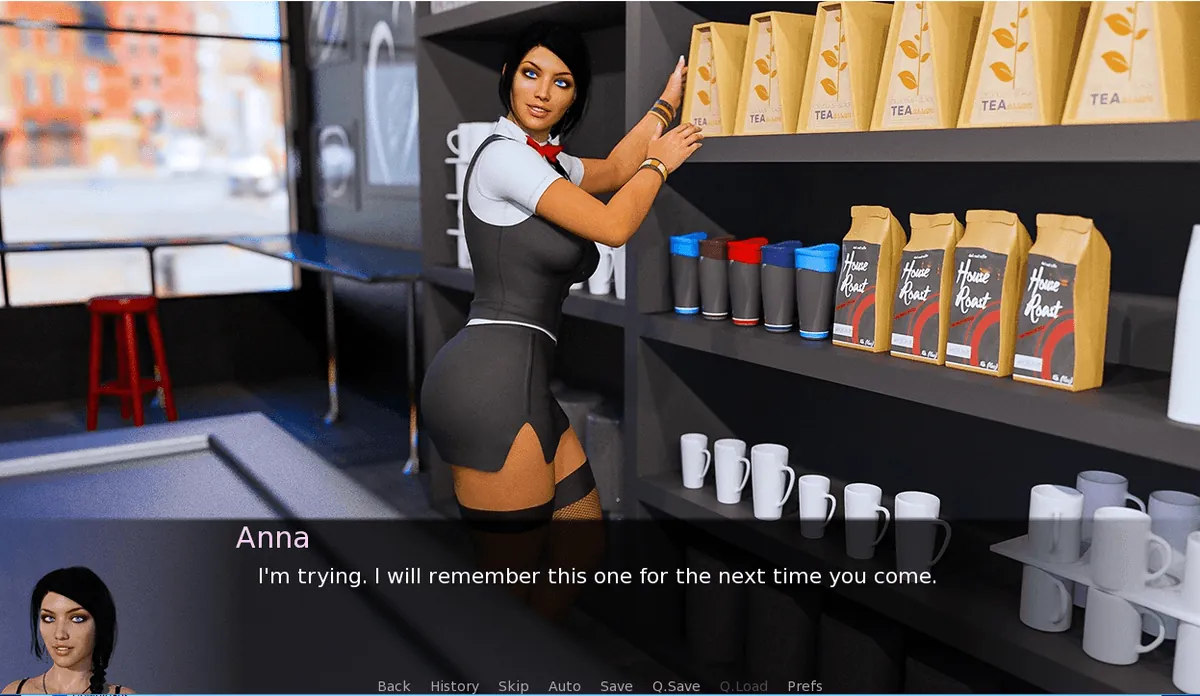
Friends in Need Screenshots

























Friends in Need review
Dive into branching stories, deep relationships, and replayable choices
Ever wondered what happens when your past failures turn into a chance to reshape lives around you? That’s the hook of Friends in Need, the gripping visual novel where you return home broke but unexpectedly wealthy, helping childhood friends through crises. I remember my first playthrough—choosing to support Jamie’s eviction fight led to unexpected bonds that kept me replaying for hours. This guide breaks down the Friends in Need gameplay, storylines, and tips to unlock every path. Whether you’re new or chasing that perfect ending, stick around for actionable advice to master this immersive world of choices, relationships, and consequences.
What Makes Friends in Need Gameplay So Addictive?
I still remember the first time I got the ‘Lone Wolf’ ending. My character was successful, sure, but utterly, crushingly alone. 😮💨 It happened because, in a critical early chapter, I chose to stay late at the internship instead of helping Jamie move apartments. It seemed like a small, practical decision at the time—just a missed afternoon. But the game remembered. That single choice started a chain reaction: Jamie felt abandoned, my other friends saw me as unreliable, and slowly, every major Friends in Need storylines branch that required tight-knit group support just… withered away. I was locked out. That moment, equal parts frustrating and brilliant, perfectly captures why Friends in Need gameplay is so utterly consuming.
At its heart, the loop is beautifully simple. You read, you choose, you manage your time. But beneath that surface lies a web of connections so complex it makes a spider’s web look straightforward. Every conversation is a building block. Every Friends in Need choices you make—from the monumental “do I loan my friend a large sum of money?” to the seemingly trivial “what emoji do I reply with?”—feeds into a living database. The game tracks everything: Friends in Need relationship scores with each character, their internal emotional states (like ‘Stressed’, ‘Hopeful’, or ‘Resentful’), and most crucially, those mysterious Friends in Need flags.
Think of flags as invisible switches. Some are simple: Helped_Jamie_Move = TRUE. Others are complex, requiring a specific sequence of choices and scores, like Group_Trust_Level_3. These flags are the secret keys that unlock or permanently lock away entire narrative pathways. Mastering this system is what transforms the experience from playing a game to living a story.
How Do Choices Shape Your Friends in Need Storylines?
Your Friends in Need storylines aren’t predefined paths you walk down; they are ecosystems you cultivate. 👩🌾 Every interaction is a nutrient, and your choices determine what grows, what thrives, and what dies on the vine.
Let me give you a concrete example from my second playthrough. Early on, my friend Sam started dropping hints about trouble with their landlord. In one run, I was hyper-focused on my character’s career. I offered quick, Practical advice (“Check your tenant rights”) but was always “too busy” to look at the actual eviction notice. This led to a flag: Sam_Feels_Unsupported. Later, when Sam faced a true crisis, they didn’t call me. That storyline ended with Sam leaving the city, a quiet, sad conclusion I never even saw directly—I just heard about it through gossip.
In my next run, I made time. I chose the Emotional response (“That sounds terrifying, I’m here for you”), and then later the Practical action of physically going with them to confront the landlord. This triggered a flag: Stood_With_Sam_Physical. Not only did this unlock a whole tense, interactive scene where we rallied the other tenants, but it also set a precedent. Later, when my character was in a bind, the entire friend group rallied around me without me even asking, because I had established a flag for Group_Culture_Of_Support.
This is the magic. The Friends in Need gameplay isn’t about picking “good” or “bad” options. It’s about picking your options, and then living with the beautifully messy, interconnected consequences. You might mend one friendship while accidentally straining another, or solve an immediate problem only to create a long-term rift. The Friends in Need storylines are a tapestry, and you’re holding all the threads.
Mastering the Dialogue System in Friends in Need
The dialogue system Friends in Need is your primary tool for shaping this world. It might look like a simple list of replies, but it’s really a psychological instrument. 🎻 Most major conversations present you with three core response types, each aligned with a different approach to friendship. Understanding these is the difference between breaking down walls and causing a total shutdown.
- Practical: Focused on solutions, logic, and actionable help. (“I’ll help you study for that test,” or “Here’s a link to a good therapist.”)
- Emotional: Focused on validation, empathy, and shared feeling. (“I’m so sorry you’re going through this,” or “It’s okay to be angry.”)
- Avoidant: Focuses on deflecting, using humor, or changing the subject. (“Well, could be worse!” or “Let’s just get pizza and not think about it.”)
The genius is that no single type is always “correct.” Its effect is intensely dependent on the character you’re talking to and their current state. A Practical response might be exactly what your stoic, overwhelmed friend Alex needs to feel grounded. That same response given to an emotionally volatile friend like Morgan in a moment of crisis might make them feel like a problem to be solved, not a person to be heard.
To make this crystal clear, here’s how the same choice can play out differently:
| Response Type | On a Stoic Character (e.g., Alex) | On an Emotional Character (e.g., Morgan) |
|---|---|---|
| Practical | Sees it as helpful and respectful. Relationship score increases. May unlock a flag for Respected_Boundaries. | Can feel cold or dismissive. Relationship score may slightly decrease. Risks setting a Feels_Judged flag. |
| Emotional | Might feel invasive or overwhelming. Could cause a temporary withdrawal. No major score change. | Feels deeply seen and supported. Large relationship score boost. Often unlocks flags like Deep_Connection_Made. |
| Avoidant | Can be a welcome relief from pressure. Maintains the status quo. Might trigger a Mutual_Understanding flag if used sparingly. | Often feels like abandonment or betrayal. Significant relationship score penalty. High risk of a Trust_Broken flag. |
My biggest piece of advice? Active listening is a game mechanic. The dialogue will often hint at what a friend needs. Is Sam saying, “I just don’t know what to do”? That’s a cue for a Practical response. Are they saying, “I just feel so lost and alone”? That’s screaming for an Emotional one. The dialogue system Friends in Need rewards you for paying attention to more than just the words.
Why Replayability Defines Friends in Need Experience
This brings us to the crowning glory of the Friends in Need gameplay: its endless replay value. 📚 If a linear game is a novel you read once, Friends in Need is an entire library of what-if scenarios contained in one package. The desire to see how to replay Friends in Need effectively is built right into your first, inevitably flawed, playthrough.
You’ll finish your first run with so many questions. What if I had sided with Kai instead of River during that big fight? What was behind the door I never unlocked because my loyalty with the group was too low? What happens if you let Jamie’s secret spill? This curiosity is the engine of replayability.
How to replay Friends in Need isn’t about speeding through text you’ve already seen. It’s about conducting a social experiment. On my third playthrough, I decided to be the “tough love” friend—always choosing the brutally honest Practical or gently challenging Avoidant options. I discovered entirely new arguments, saw characters become more resilient (or bitter), and unlocked a storyline about intervention that I never knew existed. The Friends in Need storylines have so much depth that a new personality approach doesn’t just change the ending; it changes the middle, the beginning, and all the moments in between.
The game’s structure actively supports this. The Friends in Need relationship scores and flags are so precise that you can aim for very specific outcomes. Want to see the ending where the friend group starts a business together? You’ll need to track the flags that build collective ambition and trust. It turns replayability into a rewarding puzzle.
So, for any new player diving in, here is my ultimate, practical tip: Take light notes. ✍️ You don’t need a spreadsheet (unless you want to!). Just jot down big decisions and their obvious outcomes. When a surprising scene happens, ask yourself, “What flag must have triggered this?” Pay attention to what the game is tracking. Remember, Friends in Need choices compound. A single Avoidant response won’t ruin a friendship, but a pattern of them will set a flag that changes everything.
Pro Tip: When in doubt, be present. Even if you pick the “wrong” dialogue type, choosing consistently to show up for your friends—to spend time with them when prompted—is the most reliable way to keep storylines open and discover what Friends in Need flags are waiting to be found.
FAQ: Quick Fire Questions
- What if I miss a flag? Don’t panic! Part of the authentic Friends in Need experience is living with missed connections. It makes your story unique. If you’re aiming for a specific outcome, that’s the perfect reason to explore how to replay Friends in Need and try a different approach next time.
- How to build loyalty fast? There’s no universal “fast” button, as it depends on the character. Generally, consistency is key. For emotional characters, repeatedly choosing Emotional responses builds deep bonds quickly. For pragmatic characters, follow through on Practical promises (like showing up to help). Loyalty is built on reliability, not grand, one-off gestures.
From my countless hours in Friends in Need, it’s clear this game shines through its raw take on friendships, tough choices, and branching paths that feel deeply personal. You’ve got the tools now—dive into those dialogues, track your relationships, and experiment with every response type to uncover hidden endings. Whether you aim for the heartfelt ‘Found Family’ finale or test the darker routes, it’ll change how you see loyalty and support. Grab the latest version, hit play, and let your decisions rewrite these lives. What’s your first big choice going to be? Share in the comments—I’d love to hear your stories!